AI Workers vs Virtual Assistants: Which Is Right for Your Small Business?
You need help running your business. The admin is piling up, customer messages go unanswered for hours, and you haven't taken a proper lunch break in weeks. Something has to give.
Two options keep appearing in your research: hire a virtual assistant or implement an AI Worker. Both promise to lighten your load, but they work in fundamentally different ways and suit different situations.
This guide breaks down the real differences, costs, and trade-offs so you can make the right choice for your business.
The Core Difference in 30 Seconds
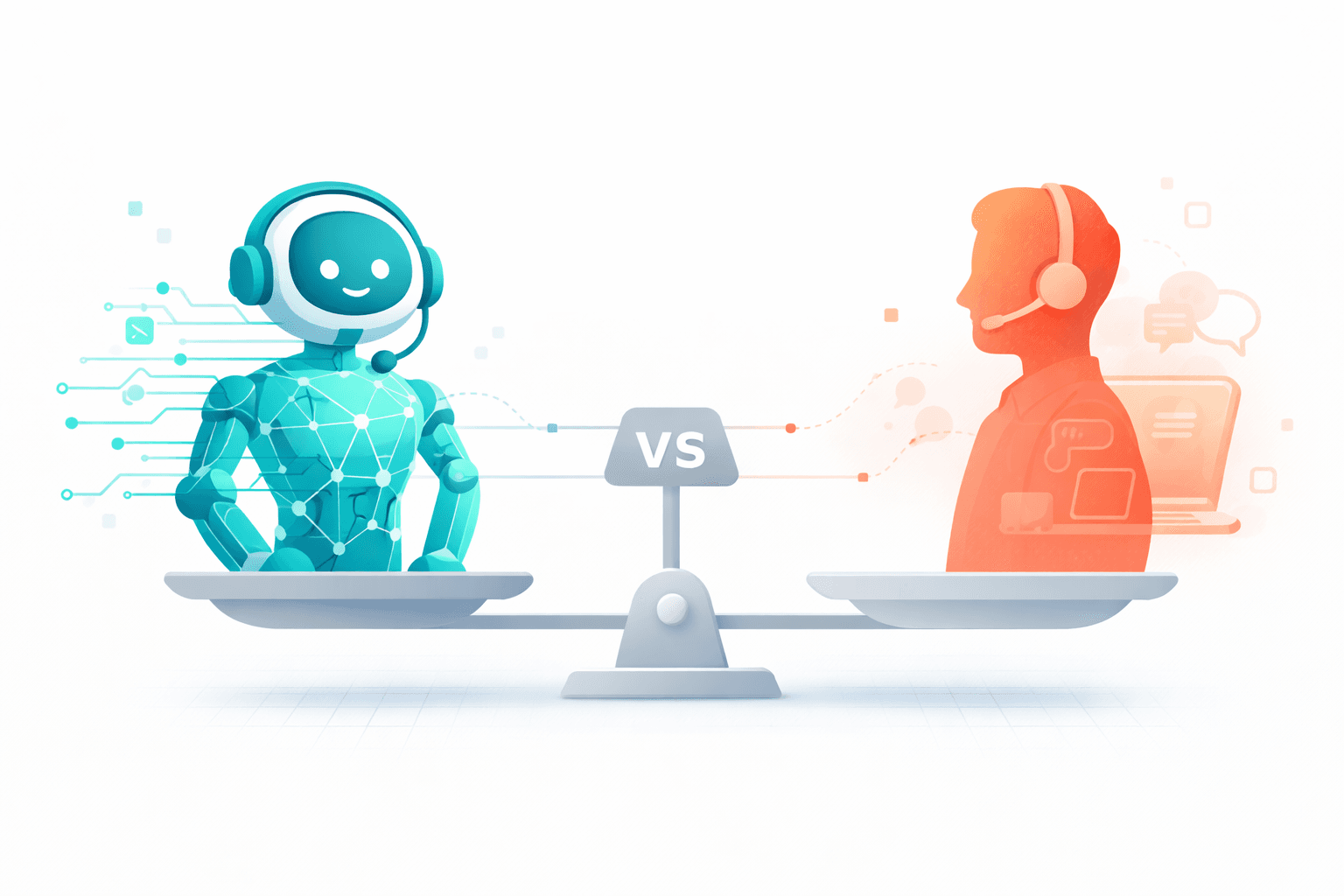
A virtual assistant (VA) is a real person working remotely who handles tasks on your behalf. They bring human judgment, creativity, and flexibility. They work set hours, need management, and cost scales with time.
An AI Worker is intelligent software that handles tasks autonomously. It works 24/7, handles high volumes instantly, and costs a flat monthly fee. It excels at consistent, repeatable work but lacks human intuition.
The choice isn't always either/or. Many businesses use both for different purposes. But understanding where each excels helps you invest wisely.
What Virtual Assistants Do Well

Virtual assistants have supported small businesses for decades. The model is proven, and for certain tasks, nothing beats having a capable human in your corner.
Complex Decision-Making
VAs handle situations requiring genuine judgment. When an angry customer sends a complaint that could escalate legally, a VA reads the subtext, considers your reputation, and crafts a response that defuses the situation. They understand stakes and nuance in ways AI still cannot match.
Creative and Strategic Work
Need someone to research competitors and summarise findings with actual insight? Plan an event with dozens of moving pieces? Draft a proposal that requires understanding your client's unspoken concerns? These tasks benefit from human creativity and strategic thinking.
Relationship Management
Building relationships with key clients, partners, or suppliers involves reading people, remembering personal details, and adapting communication styles. VAs who get to know your business become genuine extensions of your team in ways software cannot replicate.
Handling the Unexpected
When something completely novel happens—a situation your business has never encountered—humans adapt. A good VA figures out how to handle unusual requests, finds solutions to problems without clear precedents, and knows when to escalate versus improvise.
Tasks Requiring Judgment Calls
Should this refund request be approved? Is this lead worth pursuing? Does this social media comment warrant a response? These micro-decisions benefit from human judgment that weighs multiple factors simultaneously.
What AI Workers Do Well
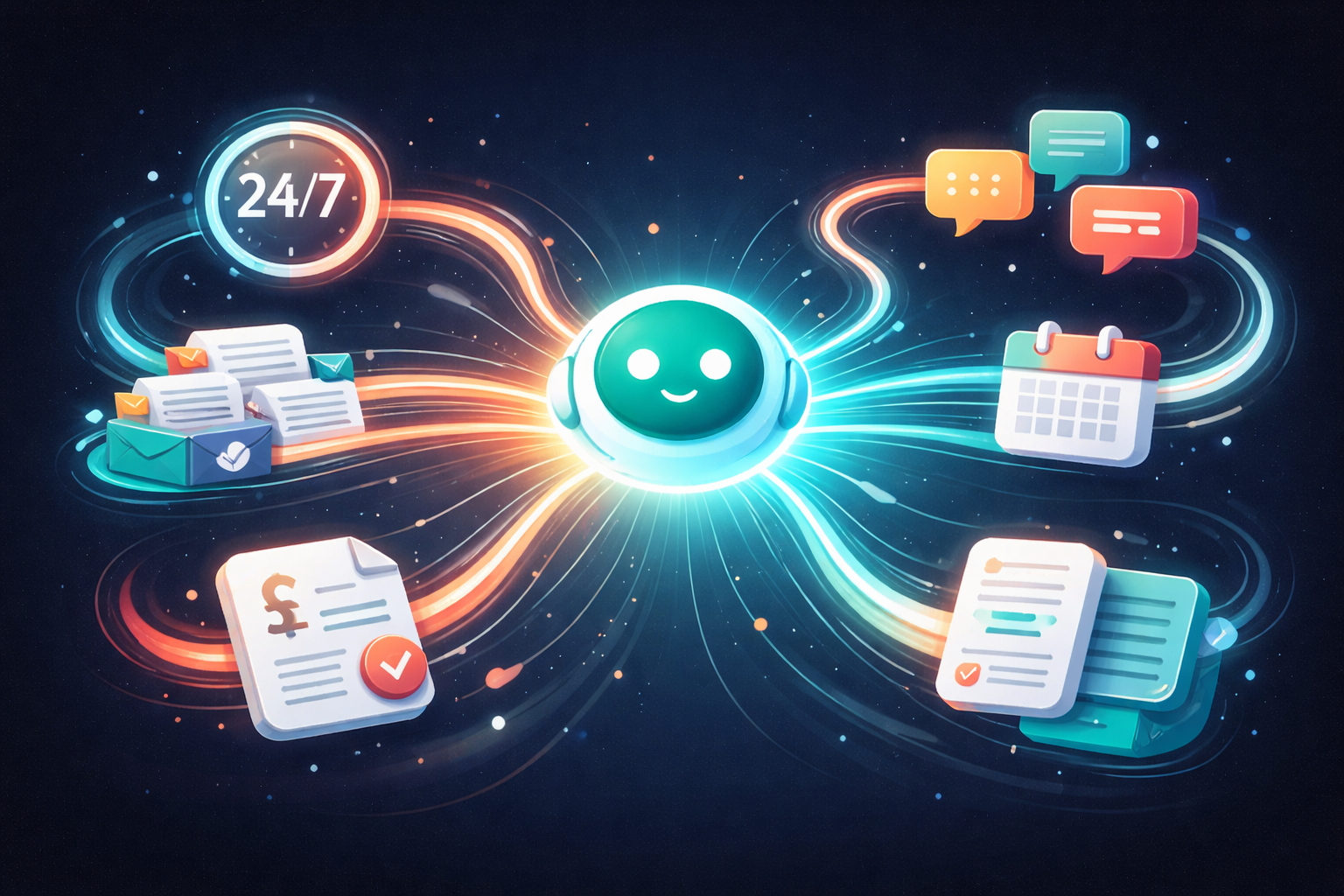
AI Workers represent a newer category, but their strengths are substantial and growing. For the right tasks, they outperform human alternatives significantly.
High-Volume Repetitive Tasks
When you receive 50 customer inquiries daily asking variations of the same 10 questions, an AI Worker handles them instantly with perfect consistency. It never gets tired of answering "What are your opening hours?" for the hundredth time. Volume that would overwhelm a VA barely registers.
Around-the-Clock Availability
AI Workers don't sleep, take holidays, or call in sick. A customer inquiry at 3am receives the same quality response as one at 3pm. For businesses serving customers across time zones or those where responsiveness drives conversions, this availability transforms customer experience.
Perfect Consistency
The fiftieth response an AI Worker sends matches the quality of the first. There's no Monday morning sluggishness or Friday afternoon drift. Every invoice is processed identically. Every appointment confirmation follows the same format. This consistency builds reliability.
Instant Scaling
When your business appears on local news and inquiries spike tenfold overnight, an AI Worker handles the volume immediately. No emergency hiring, no overtime costs, no degraded response times. Capacity matches demand automatically.
Simultaneous Multi-Tasking
While responding to a customer email, an AI Worker can simultaneously process an invoice, update a CRM record, and schedule a follow-up. Parallel processing means tasks complete faster than any sequential human approach.
Structured Data Processing
Extracting information from invoices, categorising expenses, reconciling records, updating spreadsheets—tasks involving structured data play to AI strengths. Speed and accuracy typically exceed human performance.
Real Cost Comparison
Cost often drives the decision. Here's an honest breakdown of what each option actually costs UK small businesses.
Virtual Assistant Costs
UK-based virtual assistants typically charge £15-35 per hour depending on experience and specialisation. Overseas VAs (Philippines, India) range from £5-15 per hour but may involve communication challenges and time zone complications.
For a VA working 20 hours weekly at £20/hour, expect monthly costs around £1,600-1,800 including platform fees or agency margins. Part-time arrangements of 10 hours weekly run £800-900 monthly.
Additional costs often surprise first-time VA users. Onboarding takes time—typically 2-4 weeks before a VA works efficiently. Management overhead consumes your time: briefings, reviews, feedback, and coordination. Holiday and sick cover either means gaps or paying for backup.
AI Worker Costs
AI Worker platforms typically charge flat monthly subscriptions ranging from £50-200 for small business tiers. Some charge per message or transaction, typically £0.01-0.05 per interaction.
For a business handling 1,000 customer messages monthly plus invoicing and scheduling, total AI Worker costs typically run £75-150 monthly—a fraction of VA costs for those specific tasks.
Setup requires time investment but not ongoing costs. Once configured, AI Workers don't need management, holidays, or sick cover.
The Hidden Cost Factors
Raw hourly or monthly rates don't tell the whole story.
Response time costs: If slow responses lose you one £500 sale monthly, 24/7 AI availability might pay for itself immediately. If your business doesn't depend on response speed, this benefit has less value.
Error costs: VA mistakes happen—wrong appointments, incorrect invoices, missed messages. AI Workers make different mistakes (misunderstanding unusual requests) but are perfectly consistent on routine tasks. Calculate which error type costs you more.
Opportunity costs: Hours spent managing a VA are hours not spent on revenue-generating work. If your time bills at £100/hour, five hours of weekly VA management costs £2,000 monthly in opportunity terms.
Scaling costs: Adding VA capacity means proportionally higher costs. AI Workers handle 10x volume for the same price, making growth more profitable.
Task-by-Task Comparison
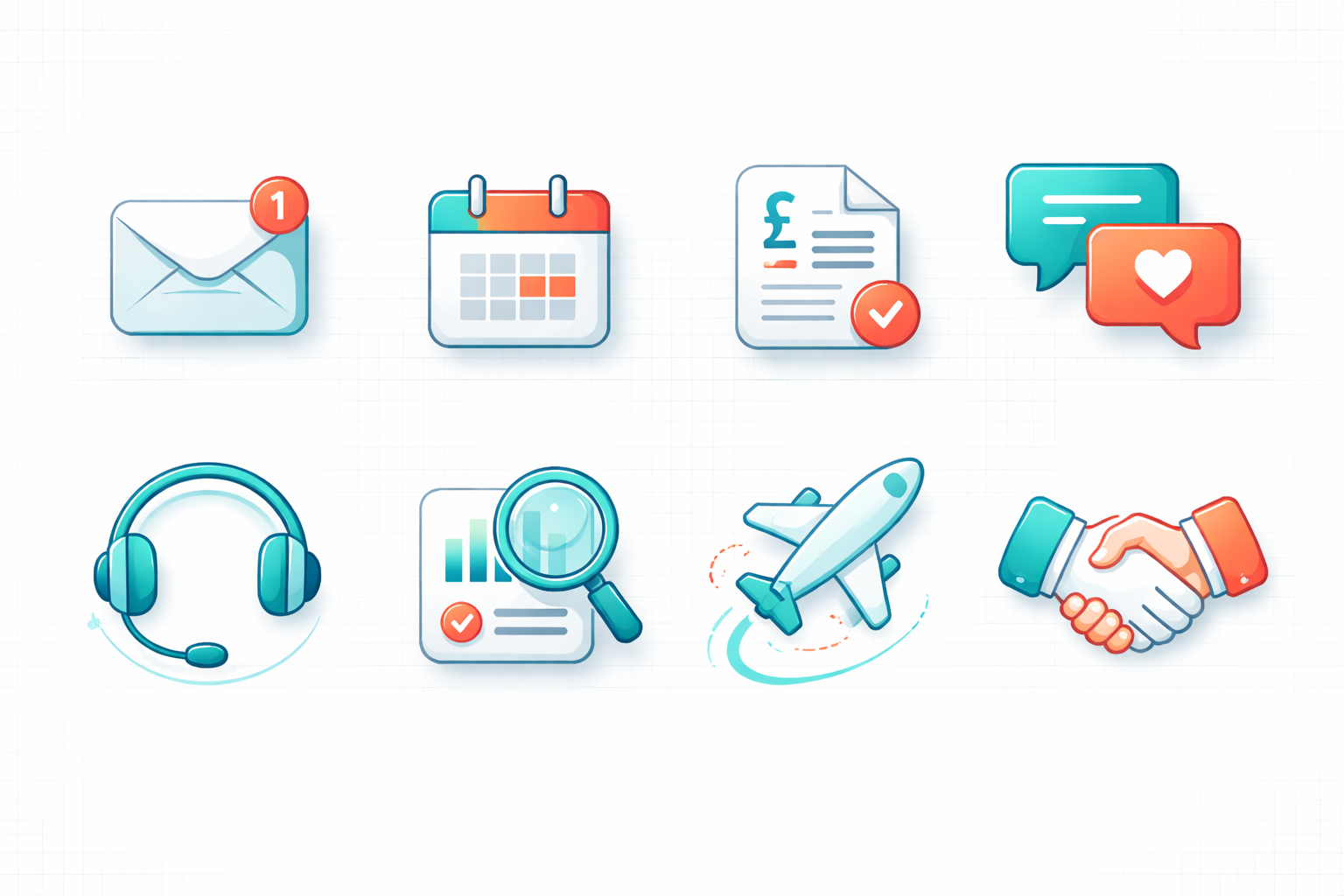
Abstract comparisons only go so far. Here's how each option handles specific small business tasks.
Email Management
VA approach: Reads emails, drafts responses, flags urgent items, handles nuanced situations appropriately. Brings judgment to prioritisation. Works during set hours.
AI Worker approach: Processes emails instantly around the clock. Handles routine inquiries automatically. Drafts responses for complex issues awaiting approval. Categorises and prioritises consistently.
Better choice: AI Worker for high-volume routine correspondence. VA for businesses with complex, relationship-heavy email requiring human judgment.
Appointment Scheduling
VA approach: Coordinates via email or phone, handles special requests, manages rescheduling with appropriate communication. Adds personal touch.
AI Worker approach: Provides instant booking through automated systems. Handles confirmations and reminders automatically. Manages cancellations and waitlists without delay. Available 24/7.
Better choice: AI Worker for most businesses. The speed and availability advantages outweigh personalisation benefits except for high-touch service businesses where scheduling conversations build relationships.
Invoice Processing
VA approach: Manually processes invoices, chases payments, handles disputes, updates records. Can exercise judgment on unusual situations.
AI Worker approach: Extracts data automatically, matches to purchase orders, flags discrepancies, sends reminders on schedule, updates accounting systems instantly.
Better choice: AI Worker for routine processing. The speed, accuracy, and consistency advantages are substantial. VA involvement makes sense only for dispute resolution requiring negotiation.
Social Media Management
VA approach: Creates original content, engages authentically with followers, handles sensitive comments thoughtfully, builds genuine community. Brings creative ideas.
AI Worker approach: Schedules pre-created content, provides consistent response templates, monitors mentions, generates reports. Can draft content for review.
Better choice: VA for businesses where social media is a key brand-building channel. AI Worker for businesses needing basic social presence without heavy investment in community building.
Customer Support
VA approach: Handles complex issues with empathy, makes judgment calls on refunds and exceptions, builds relationships with repeat customers. Limited by working hours.
AI Worker approach: Instant responses 24/7, handles high volumes effortlessly, perfect consistency, escalates complex issues appropriately. Lacks genuine empathy.
Better choice: Hybrid approach often works best. AI Worker handles first response and routine queries instantly while VAs manage escalations and complex cases.
Research Tasks
VA approach: Gathers information, synthesises findings, provides actual analysis and recommendations. Understands what you're really looking for.
AI Worker approach: Can compile information from defined sources but struggles with open-ended research requiring judgment about relevance and reliability.
Better choice: VA for research requiring interpretation and insight. AI Worker only for highly structured data gathering with clear parameters.
Calendar and Travel Management
VA approach: Manages complex scheduling with multiple stakeholders, handles travel bookings with preferences in mind, adapts to changes smoothly.
AI Worker approach: Handles straightforward scheduling efficiently. Struggles with complex multi-party coordination and nuanced preferences.
Better choice: Depends on complexity. Simple calendar management suits AI Workers. Complex executive scheduling with travel still benefits from VA judgment.
The Hybrid Approach
Many businesses achieve best results combining both options strategically.
The model that works: AI Workers handle frontline, high-volume, routine tasks—first-response customer communication, appointment booking, invoice processing, basic enquiries. VAs handle escalations, complex issues, relationship management, and creative work.
This hybrid captures AI Worker efficiency for routine work while preserving human judgment where it matters. The AI Worker acts as an always-on first line, with the VA providing expert backup.
Cost-wise, this often proves optimal. You might spend £100 monthly on an AI Worker handling 80% of routine tasks, plus £400 monthly on a VA for 5 hours weekly handling the 20% requiring human attention. Total: £500 monthly for coverage that would cost £1,600+ with VA-only approaches.
The key is clear boundaries. Define exactly which tasks route to AI Workers versus VAs. Establish escalation criteria so nothing falls through cracks. Review regularly to optimise the split.
Questions to Guide Your Decision
Work through these questions to clarify which option suits your situation.
What's your task volume? Low volume (under 20 tasks daily) can be handled personally or with minimal VA support. High volume (50+ daily) typically justifies AI Worker implementation for the efficiency gains.
How routine are your tasks? If 80%+ of tasks follow predictable patterns, AI Workers will handle them effectively. If most tasks require judgment or customisation, VA flexibility adds more value.
How important is response time? If customers expect instant responses or speed affects conversion, AI Worker availability provides significant advantage. If your customers accept next-day responses, the urgency diminishes.
What's your budget reality? Under £200 monthly limits you to AI Workers or very minimal VA support. £500-1,000 monthly opens hybrid options. Over £1,000 monthly makes comprehensive VA coverage feasible.
How comfortable are you with technology? AI Workers require setup and ongoing refinement. If technology frustrates you, a VA handles tasks without requiring your technical involvement.
How complex is your customer communication? Routine queries suit AI Workers. Complex sales conversations, sensitive complaints, and relationship-building favour VA handling.
Do you need creative output? Content creation, strategic planning, and creative problem-solving still favour human VAs. AI Workers assist but don't replace human creativity.
Making the Transition
Whichever direction you choose, transition thoughtfully.
Moving to AI Workers
Start with one defined process—often customer enquiries or appointment scheduling. Configure the AI Worker thoroughly using historical examples. Run in supervised mode initially, reviewing outputs before they send. Gradually reduce oversight as reliability is proven. Expand to additional processes sequentially.
Expect a 2-4 week adjustment period. Early outputs won't be perfect. Refinement based on real situations improves performance steadily.
Hiring a Virtual Assistant
Define responsibilities clearly before hiring. Document your processes so the VA can learn them. Start with a trial period—most platforms support this. Invest time in the first two weeks for proper onboarding. Establish communication rhythms that work for both parties.
Expect 3-4 weeks before a VA works efficiently. Relationship building takes time. Good VAs improve continuously as they learn your business.
Transitioning from VA to AI Worker
If you're currently using a VA and considering AI Workers for some tasks, involve your VA in the transition. They understand your processes and can help configure AI Workers effectively. Often the best outcome is reducing VA hours rather than eliminating them, shifting VA focus to tasks that genuinely benefit from human involvement.
Common Mistakes to Avoid
Learn from others' errors.
Choosing based solely on cost: The cheapest option isn't always most economical. An AI Worker that mishandles customers or a VA who makes repeated errors costs more than the savings.
Expecting instant perfection: Both AI Workers and VAs need time to learn your business. Impatience during setup leads to abandonment before benefits materialise.
Unclear task boundaries: Ambiguity about who handles what creates gaps and overlaps. Document responsibilities clearly.
Inadequate onboarding: Skimping on setup time—for AI Worker configuration or VA training—undermines long-term performance.
Set and forget mentality: Both options need ongoing attention. AI Workers need refinement as your business evolves. VAs need management and development.
Ignoring the hybrid option: Binary thinking misses opportunities. Combining AI Workers and VAs often outperforms either alone.
The Bottom Line
AI Workers and virtual assistants serve different needs. Neither is universally superior.
Choose AI Workers when: You have high-volume routine tasks, need 24/7 availability, want consistent handling at scale, and have limited budget for support.
Choose virtual assistants when: Your tasks require judgment and creativity, relationships matter, complexity is high, and you prefer human collaboration.
Choose both when: You have volume justifying AI Worker efficiency plus complex tasks needing human judgment, and budget supports hybrid approaches.
The businesses getting this right aren't asking "which is better?" They're asking "which tasks suit which approach?" and building support systems that play to each option's strengths.
Start by auditing your current tasks. Categorise them by routine versus complex, urgent versus flexible, high-volume versus occasional. The pattern that emerges points toward your answer.
Frequently Asked Questions
What's the main difference between an AI Worker and a virtual assistant?
A virtual assistant is a real person working remotely who brings human judgment, creativity, and flexibility to tasks. An AI Worker is intelligent software that handles tasks autonomously around the clock. VAs excel at complex, nuanced work requiring human insight. AI Workers excel at high-volume, consistent, routine tasks. Cost structures differ significantly—VAs charge hourly while AI Workers typically charge flat monthly fees.
Which is cheaper, an AI Worker or a virtual assistant?
For routine tasks, AI Workers cost significantly less. A typical AI Worker costs £75-150 monthly regardless of volume, while a VA handling equivalent work might cost £800-1,600 monthly at 10-20 hours weekly. However, for complex tasks requiring human judgment, VA time may be more cost-effective than trying to make AI Workers handle unsuitable work. Total cost depends on your specific task mix.
Can an AI Worker completely replace a virtual assistant?
For some businesses, yes. If your support needs are primarily routine enquiries, scheduling, and basic administration, an AI Worker can handle everything. However, most businesses have at least some tasks requiring human judgment—complex customer issues, creative work, relationship management. A hybrid approach where AI Workers handle routine tasks and VAs handle complex ones often works better than full replacement.
How do I know if my tasks are suitable for an AI Worker?
Tasks suit AI Workers when they follow predictable patterns, occur frequently, have clear right answers, and don't require emotional intelligence. Customer FAQ responses, appointment booking, invoice processing, and data entry are typically suitable. Tasks involving negotiation, creative judgment, relationship nuance, or unprecedented situations still favour human handling.
Are virtual assistants better for customer service?
It depends on your customer service nature. For high-volume routine enquiries where speed matters, AI Workers outperform—instant responses 24/7 versus waiting for VA availability. For complex complaints, sensitive issues, or situations requiring empathy and judgment, VAs provide better outcomes. Many businesses use AI Workers for first response and routine queries while VAs handle escalations.
How long does it take to onboard each option?
AI Workers typically achieve reliable performance within 2-4 weeks of setup and refinement. Virtual assistants usually need 3-4 weeks to learn your business and work efficiently. Neither provides instant results. The investment in proper onboarding pays dividends through better long-term performance for both options.
Can I use both an AI Worker and a virtual assistant together?
Yes, and this hybrid approach often produces best results. AI Workers handle frontline routine tasks—first-response communication, scheduling, basic processing. VAs handle escalations, complex issues, and creative work. This captures AI efficiency for routine work while preserving human judgment where needed. Clear boundaries between responsibilities are essential for hybrid approaches.
What happens when an AI Worker can't handle a request?
Well-configured AI Workers recognise their limitations and escalate appropriately. They might flag unusual requests for human review, transfer complex enquiries to a VA or team member, or acknowledge they cannot help and offer alternatives. The key is configuring clear escalation triggers so customers receive appropriate help rather than inadequate AI responses.
Do virtual assistants work UK hours?
UK-based VAs typically work UK business hours, though arrangements vary. Overseas VAs may work different hours—sometimes advantageous for out-of-hours coverage, sometimes challenging for real-time collaboration. AI Workers avoid this consideration entirely by operating 24/7 regardless of time zones.
Which option is better for a very small business or sole trader?
For sole traders with limited budgets, AI Workers often provide better value—comprehensive support for £75-150 monthly versus minimum £400-500 monthly for meaningful VA hours. However, if your work is primarily complex and creative with minimal routine tasks, even limited VA hours may add more value than AI Workers handling unsuitable work. Assess your actual task mix rather than defaulting based on business size.

TheyWork Team
TheyWork gives small UK businesses an AI-powered worker that finds leads, writes content, responds to reviews, and handles admin — so you can focus on growing.
Ready to try an AI Worker?
Get your own AI worker that finds leads, writes content, and handles admin. Start free for 7 days.
Get startedRelated articles
The Complete Guide to AI Workers for UK Small Businesses
Everything UK small business owners need to know about AI Workers in 2026. Learn what they are, how they work, costs, benefits, and how to implement them in your business.
10 Signs Your Small Business Is Ready for an AI Worker
Not sure if AI is right for your business? Here are 10 clear signs that your small business is ready for an AI Worker—and would benefit from implementing one today.